
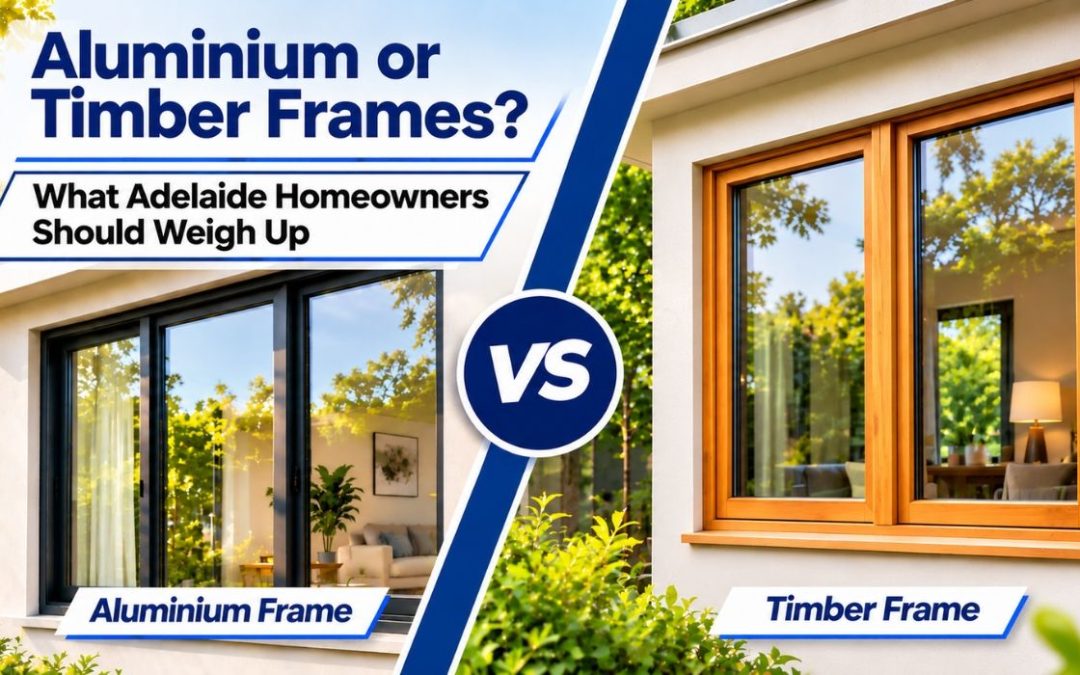
Choosing new windows means weighing up more than the appearance of the frame. The material affects maintenance, design options and thermal performance, while the glass, seals, hardware and installation influence how the complete window works.
For many Adelaide homeowners, aluminium is the more practical all-round choice. It is strong, lightweight, available in a wide range of configurations and finishes, and usually requires less routine surface maintenance than exposed timber. Timber still has a place, especially when a home’s character depends on natural woodwork or when the insulating properties of the frame are a priority. The right decision comes down to the building and the complete window specification, not a blanket claim about either material.
Aluminium or timber: how the two materials compare
| What matters | Aluminium windows | Timber windows |
| Routine maintenance | Usually low maintenance. No routine repainting is generally needed for a sound factory finish, but cleaning and hardware checks still matter. | External paint or stain protects the timber from weathering and moisture. The finish needs inspection and renewal as required. |
| Thermal behaviour | Standard aluminium conducts heat readily. A thermal break can reduce heat transfer, but performance must be checked for the actual system. | Naturally less conductive, so timber has an insulation advantage over standard aluminium when the frame material is compared directly. |
| Appearance | Clean lines, a choice of frame widths and anodised or powder-coated finishes. | Natural grain, texture and traditional joinery character. |
| Configurations | Commonly available in sliding, awning, double-hung and bi-fold formats, with custom sizing depending on the system. | Can be made in traditional joinery styles, but bespoke detailing and finishing need to be specified. |
| Ownership considerations | A practical option for homeowners who want less routine finish work and flexible design choices. | Can suit heritage or character homes, but the owner should plan for finish care and moisture management. |
This comparison describes typical material characteristics, not a performance rating for every available product. Window construction, glass, seals, hardware, installation and exposure can change the result.
Why aluminium is the practical choice for many Adelaide homes
Less routine finish maintenance
A major advantage of aluminium is the reduced need for ongoing surface finishing. Exposed timber needs a suitable protective coating to manage moisture and weathering. WoodSolutions explains that exterior paints and coatings help protect timber from ultraviolet exposure and general weathering, and that maintenance should include cleaning, checking hardware and investigating moisture build-up.
Aluminium avoids the same routine repainting or restaining cycle associated with exposed timber. Alum Windows describes its aluminium frames as low maintenance and says they do not require repainting. Its window range also includes concealed cavities designed to make cleaning easier.
That does not make aluminium maintenance-free. Frames still need to be cleaned, sliding tracks kept free of debris, and seals, rollers, locks and drainage paths checked. Homes close to the coast or in exposed locations should follow the supplier’s care instructions for the selected finish and hardware.
Flexible finishes and window configurations
Aluminium is easy to specify across different room layouts and architectural styles. Alum Windows lists awning, sliding, double-hung and bi-fold window options, with custom sizes and configurations, anodised or powder-coated finishes and customisable hardware.
That flexibility matters when a project needs different window types across the same home. A sliding window may suit a living room where an outward-opening sash would interfere with a deck or walkway. An awning window may be useful in a kitchen, bathroom or high-level opening. The opening style should be selected for the room, but the frame material can remain consistent across the design.
Aluminium also suits homeowners who want a consistent finish across several elevations or want to coordinate windows with aluminium doors. Frame sections and sightlines still vary between systems, so inspect an actual sample or technical drawing before approving the design.
Strength and everyday use
Aluminium combines relatively low weight with a robust frame, making it a practical material for a broad range of residential and commercial window systems. The hardware and frame design determine how the window operates and how it performs in use. Alum Windows describes product features such as smooth-glide rollers, weatherproof flaps and anti-lift blocks on its published website. Confirm which features are included in the specific model being quoted.
Where timber still has an advantage
Timber has two genuine strengths: its natural appearance and its insulating properties. The grain, texture and depth of a timber frame can suit period homes, heritage-style architecture and renovations where the original joinery is an important part of the façade. If the goal is to retain the look of original timber windows, restoration may be worth considering before replacing them.
Timber is also naturally less conductive than aluminium. The Australian Government’s energy guidance describes timber frames as highly energy efficient, while noting they require more maintenance than aluminium and uPVC frames. For projects where natural materials or traditional joinery are central to the design, timber may be worth the extra care.
Timber should not be treated as automatically maintenance-heavy in every setting. WoodSolutions notes that suitable durable timber can be left unfinished in sheltered and controlled locations, but it also warns that unfinished timber absorbs and loses moisture more readily and needs careful detailing. Exposure, timber species, components and maintenance all affect durability.
Thermal performance: what homeowners should know
Thermal performance is the main area where a simple “aluminium is better” claim would be misleading. Standard aluminium conducts heat more readily than timber. The Australian Government explains that aluminium is a good heat conductor, while a thermally broken aluminium frame uses a non-conductive insulating barrier between the inner and outer profiles to reduce heat transfer.
The important point is to compare the whole window, not the frame material or glass alone. A window’s performance includes the frame, glass, seals and spacers. Two measurements are particularly useful:
- Whole-window U-value (Uw): measures heat transfer through the complete window. A lower Uw means better resistance to heat flow.
- Solar Heat Gain Coefficient (SHGCw): measures how much solar heat passes through the complete window. A lower value means less solar heat enters, although the preferred value depends on orientation, shading and the home’s heating and cooling needs.
YourHome reproduces example Window Energy Rating Scheme (WERS) values that show the effect of frame material in typical configurations:
| Example window configuration | Whole-window Uw | How to read it |
| Aluminium frame, single glazed with 3 mm clear glass | 6.9 | Higher heat transfer in this example. |
| Timber or uPVC frame, single glazed with 3 mm clear glass | 5.5 | Lower heat transfer than the aluminium example. |
| Aluminium frame, double glazed with 3 mm glass / 6 mm air gap / 3 mm clear glass | 4.2 | Improved over the single-glazed aluminium example. |
| Timber or uPVC frame, double glazed with 3 mm glass / 6 mm air gap / 3 mm clear glass | 3.0 | Lower heat transfer than the corresponding aluminium example. |
These are reference examples published by YourHome from WERS, not ratings for every modern product and not Alum Windows product ratings. They demonstrate why timber can have a thermal advantage over standard aluminium in comparable example configurations. Actual results depend on the specific frame, glass, seals, opening type and dimensions.
Can glazing improve aluminium window performance?
Yes. Glass selection can materially affect the finished window’s performance. YourHome explains that low-emissivity (low-e) coatings, insulated glass units and solar-control choices can change heat transfer and solar heat gain. However, better glass does not remove the need to consider the frame.
A thermal break is another design approach: it interrupts the direct path of heat through the aluminium profile. If thermal performance is a priority, ask whether the quoted frame includes a thermal break and request the whole-window Uw and SHGCw for that exact configuration. Do not assume that every aluminium window has a thermal break or that double glazing alone guarantees a particular rating.
Alum Windows states that its designers can help work towards a specified U-rating using single or double glazing, e-glass, laminated or thickened glass options. The public website does not publish numeric WERS ratings for every window configuration, so the technical data for the selected product should be confirmed before a performance claim is made.
WERS is useful because it reports whole-window performance information, including Uw, SHGCw, air infiltration and visible light transmittance, and provides heating and cooling star ratings. Check that any rating or certificate matches the exact product and glass being quoted.
Maintenance and durability in Adelaide conditions
Timber frames need a finish and maintenance plan suited to the site. WoodSolutions recommends regular cleaning, with more frequent attention in coastal areas, plus routine checks and lubrication of hardware. It also advises investigating moisture pooling, drainage and waterproofing issues rather than allowing them to continue.
Aluminium is the lower-maintenance option for homeowners who do not want to manage an external paint or stain finish. It still needs washing and occasional checks of moving parts, seals and tracks. The finish, hardware and product design should be appropriate for the building’s exposure. Salt air and airborne contaminants can increase the need for cleaning, so ask the manufacturer or supplier for a site-specific care schedule.
For either frame material, durability depends on more than the name of the material. Check the quality of the frame system, finish, hardware, drainage, seals, installation and written warranty. WoodSolutions specifically notes that timber-window durability depends on exposure, component durability and regular maintenance.
Does aluminium always cost less than timber?
No single price rule applies to every window. The final cost depends on the opening size, window style, frame system, glass, finish, hardware, custom joinery, access and installation scope. Timber can involve more specialist joinery and finishing. Aluminium can be competitive for common configurations, but a bespoke aluminium system is not automatically cheaper than a straightforward timber window.
Compare itemised quotations for the same dimensions, opening style, glass build-up, finish, hardware, screens and installation work. Include removal of old frames, reveals, flashing, perimeter sealing, making good and disposal where relevant. Then consider the likely maintenance work over time. A low initial quote is not necessarily the lowest-cost option if the specification is incomplete or does not meet the home’s performance needs.
Which material suits different Adelaide projects?
| Project priority | Practical starting point | Why |
| Low routine maintenance | Aluminium | It avoids the same external painting or staining routine associated with exposed timber. |
| Contemporary design and colour choice | Aluminium | Powder-coated or anodised finishes and several opening configurations give design flexibility. |
| Original heritage joinery or a natural timber finish | Timber may be more suitable | The material and profile can better preserve the intended character of the building. Check heritage requirements before replacing original windows. |
| Thermal performance is the first priority | Compare tested whole-window data | Timber has a natural frame-insulation advantage over standard aluminium, but the complete frame and glass specification must be assessed. |
| Large or multi-panel opening | Compare aluminium systems first | Aluminium ranges commonly include sliding and bi-fold configurations. Confirm size, hardware and performance limits for the chosen system. |
| Coastal or highly exposed site | Product-specific assessment | Aluminium remains practical but needs suitable finish selection and cleaning; timber needs suitable species, protective detailing and maintenance. |
For an older home, check local heritage controls and the original window proportions before choosing a replacement. Aluminium double-hung windows can provide a traditional opening style, but the frame profile, glazing bars, colour and overall dimensions still need to suit the building.
What to ask before accepting a window quote
Use these questions to compare the actual products being quoted:
- What exact frame system is included? Ask whether it is standard aluminium, thermally broken aluminium or a named timber species and joinery system.
- What are the whole-window Uw and SHGCw values? Request figures for the exact frame, glass, dimensions and opening style, not a glass-only value.
- Is there WERS or other AFRC-recognised evidence? Confirm that the certificate or report applies to the system being supplied.
- What glass is included? Check pane thickness, air or gas gap, low-e coating, laminated glass and any safety-glazing requirements.
- What finish is specified? Confirm the anodised or powder-coated finish and the care requirements for the site exposure.
- Which hardware, seals and drainage details are included? These affect operation, weather resistance and ongoing maintenance.
- What is included in installation? Confirm removal, flashing, perimeter sealing, reveals, finishing and disposal.
- What standards and site requirements apply? Confirm the relevant window assembly and glazing requirements with the supplier and building professional. AS 1288:2021 covers glass selection and installation; AS 2047 addresses windows and external glazed doors in buildings.
- What warranty and maintenance instructions apply? Get the written terms for the frame, glass, finish and hardware.
Keep the final quotation, window schedule, drawings, performance documents and warranty together. This makes it easier to check that the product installed matches the one that was specified.
A local note on Adelaide climate and building requirements
South Australia’s climate-zone maps identify the temperate Adelaide region generally as climate zone 5. The Adelaide Hills and South-East are generally zone 6, while arid regions of the state are zone 4. The exact location and site conditions matter, so a specification used in metropolitan Adelaide should not automatically be applied to every property in the Hills or regional South Australia.
Orientation and shading also matter. A large west-facing window may need a different solar-control approach from a shaded south-facing opening. Compare the whole-window U-value and SHGCw alongside the room’s orientation, glazing area and external shading rather than choosing a frame or glass option in isolation.
As at 4 November 2026, PlanSA states that NCC 2022 Amendment 2 remains in force in South Australia until 30 April 2027, with NCC 2025 scheduled for adoption on 1 May 2027. Requirements depend on the building class, work type and approval timing. Confirm the applicable provisions with the project’s designer, energy assessor or building certifier.
Aluminium windows from Alum Windows
For homeowners and building professionals considering aluminium, Alum Windows supplies custom windows for residential, semi-commercial and commercial projects across Adelaide. Its published range includes awning, sliding, double-hung and bi-fold windows, with options for custom sizes, configurations, anodised or powder-coated finishes and hardware.
The company also describes glass options including single and double glazing, e-glass, laminated and thickened glass, and says its team can help work towards a specified U-rating. Its homepage states a seven-year manufacturer’s warranty for windows and doors. Confirm the current options, product-specific performance information and warranty terms for the system being quoted.
You can view the Alum Windows aluminium window range and discuss the frame, glass and finish that suit your project before requesting a quotation.
Frequently asked questions
Are aluminium windows better than timber windows?
For many Adelaide homeowners, aluminium is the more practical all-round choice because it is low maintenance, strong and available in a broad range of finishes and configurations. Timber has a natural insulation advantage and may be more appropriate for heritage homes or designs that call for visible timber joinery.
Do timber windows insulate better than aluminium?
Timber is naturally less conductive than standard aluminium and generally provides better frame insulation when the materials are compared directly. Thermally broken aluminium reduces heat transfer through the frame. Compare whole-window Uw and SHGCw values for the actual products rather than relying on the material name alone.
Do aluminium windows need maintenance?
Yes, but generally less routine surface-finishing work than exposed timber. Clean the frames and tracks, keep drainage paths clear and check seals, rollers and locks. Follow the care instructions for the finish and the conditions at the property.
Are aluminium windows always cheaper than timber?
No. Cost depends on size, opening style, frame system, glass, finish, hardware and installation. Compare like-for-like itemised quotes and include expected maintenance when assessing long-term value.
Can aluminium windows suit older or heritage-style homes?
They can suit some older homes, particularly where a traditional opening style such as double-hung is appropriate. The frame proportions, finish and detailing still need to match the building, and heritage or planning requirements should be checked before replacing original windows.
Does double glazing make every aluminium window as efficient as timber?
No. Double glazing can improve the glass component, but the frame still affects the whole-window result. A thermal break can reduce heat transfer through an aluminium frame. Ask for whole-window performance data for the exact configuration.
What is the most important figure on a window quote?
Start with the whole-window Uw and SHGCw, then check WERS or other recognised performance evidence. Make sure the data matches the quoted frame, glass, size and opening type. Also compare installation details, hardware, maintenance instructions and warranty terms.
The verdict: aluminium is the practical choice for most homes
Timber has a place where its natural grain, traditional detailing or insulating properties are central to the project. But for homeowners who want a strong, adaptable window frame with a broad choice of finishes and less routine surface maintenance, aluminium is the more practical option for many Adelaide homes.
The thermal specification still matters. Standard aluminium conducts heat more readily than timber, so compare the whole-window Uw and SHGCw and confirm the actual frame and glass combination. A well-informed decision is based on the complete window, the home’s exposure and the maintenance the owner is prepared to undertake.
To explore available configurations, finishes and glass options, visit the Alum Windows aluminium window range or contact the team to discuss the requirements for your project.